3D printer size: the part, then the door
Measure the largest part you will print in one piece on all three axes, then buy the smallest build volume it clears. Across the machines we track that runs from a 180 mm cube on the Bambu Lab A1 mini to 500 mm a side on the Sovol SV08 Max, and Bambu sells its 256 mm cube on printing a helmet in one piece. Then measure the bench, the shelf above it and the doorway, because the frame and the filament unit do not grow in proportion to the bed.
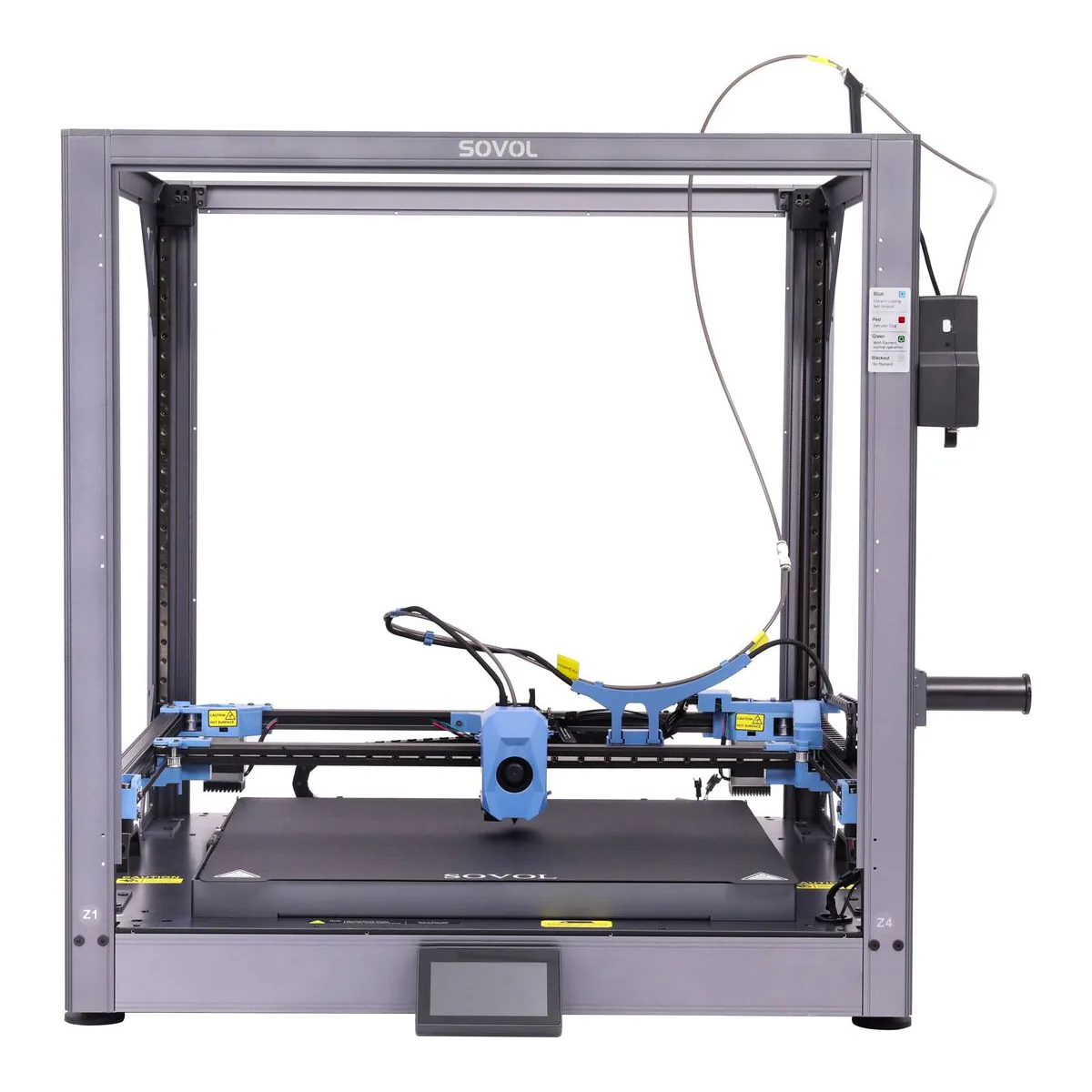
The build volume on the spec sheet is not always the volume you get. It is never the size of the machine. Sovol rates the SV08 Max at 500 mm tall open and 450 mm with its enclosure kit fitted, and lists the printer at 700 x 710 x 750 mm before the spool holder. Creality's K2 Plus is 640 mm tall alone and 916 mm as the Combo, with its filament system on the lid.
What decides it, in order
Work down these. Each one narrows the answer, and the first is the one most buying guides skip.
What is the largest single part you will print?
Every other answer follows from one measurement, taken in the slicer on all three axes.
- Under 180 mm on every side
- Household fixes, desk parts and small models. The Bambu Lab A1 mini prints a 180 x 180 x 180 mm cube, and Tom's Hardware calls that build size small but roomy enough for many practical prints.
- Up to 256 mm, a helmet or a mask
- Three of the eight machines here share this size. The Bambu Lab A1, P1S and P2S all print 256 x 256 x 256 mm, Bambu markets the A1 on printing a helmet in one piece, and TechRadar says the A1 has enough print volume for cosplay helmets and masks.
- Between 270 and 390 mm
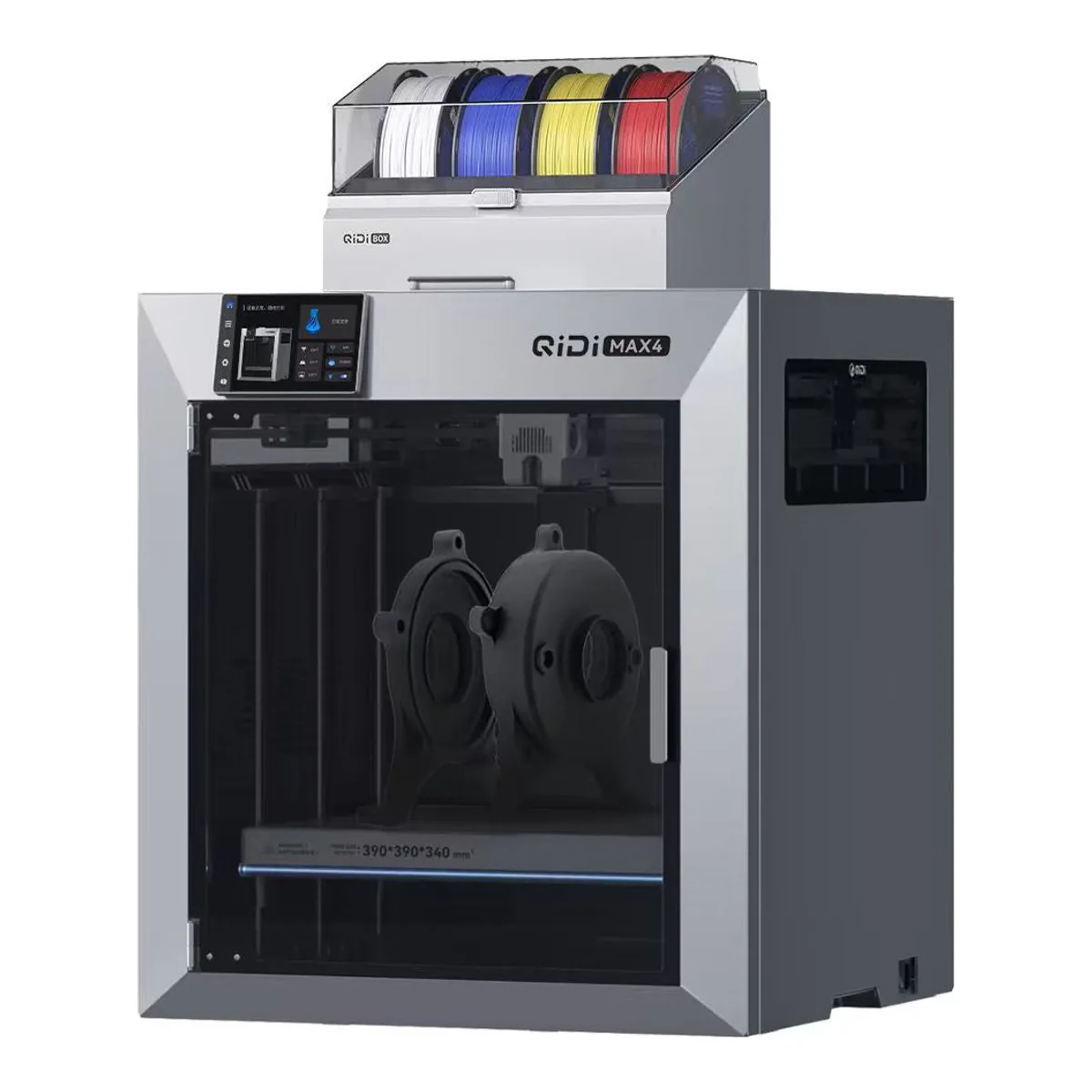
- The Snapmaker U1 prints 270 mm a side, the Creality K2 Plus 350 mm, and the QIDI Max4 390 x 390 x 340 mm. The Max4 is the wider of the last two and 10 mm shorter, so check the tallest axis of the part before the widest.
- Past 390 mm, a prop or a furniture part
- The Sovol SV08 Max at 500 x 500 x 500 mm. 3D Printer World would choose it for wide props and prototype housings that would otherwise need joining.
Does the stated volume survive the options you add?
A build volume is quoted for one configuration, and an enclosure fitted later can take some of it back.
- An enclosure kit bolted on afterwards
- Sovol cuts the SV08 Max from 500 to 450 mm tall with its enclosure kit, and 3D Printer World would avoid the machine for enclosed jobs needing more than 450 mm of upright height. Tom's Hardware adds that the build height has to be changed in the configuration, or the printer will happily smash itself into the top.
- Several toolheads sharing one bed
- On the Snapmaker U1 the toolheads do not cost you room. Fauxhammer lists the full 270 mm volume as shared by four tools.
- Enclosed as shipped
- The P1S, P2S, K2 Plus and Max4 come enclosed, so the build volume on their spec sheets matches the machine in the box.
What material is the big part in?
The shelf splits on enclosure and chamber heat, and a big bed is where the split shows. A printer-hub guide to the QIDI Max4 lists warping and lifting among the general FDM problems as relevant on its 390 mm bed.
- PLA, PETG or TPU
- Any machine here, with one catch on the heated ones. Bambu lists ABS, ASA, PC, PA and PET as not recommended on the open A1 and A1 mini, which costs a PLA printer nothing. On the Max4, QIDI says not to set the chamber above 45°C for PLA, and printer-hub puts heat creep clogs with PLA and PETG first among its known issues.
- ABS or ASA
- An enclosure at minimum. The P2S is fully enclosed with no active chamber heating, and the reviews split on it: Tom's Hardware ran ABS without issue, while TechRadar calls it less suitable for ASA and ABS. For large ABS or ASA work on the open SV08 Max, 3D Printer World says to budget for the enclosure, any chamber heater and ventilation.
- Nylon, PC or nylon-based fiber blends
- An actively heated chamber, for a big part. Bambu does list PA and PC as supported on the P2S, and TechRadar still tells buyers who need active chamber heating for high-temp polymers to skip it. The K2 Plus heats its chamber to 60°C and the Max4 to 65°C, and 3D Printed Decor reports the Max4 slicer turned the chamber heat on by itself for ABS, glass-filled ABS and PA12-CF.
Where will the printer live?
The frame adds a margin around the bed on every side, the filament unit often sits on top, and neither is proportional to the build volume.
- On a desk
- The A1 mini is 347 x 315 x 365 mm and 5.5 kg by Bambu's figures. Among the 256 mm machines, Bambu's own listing puts the open A1 at 465 mm wide against 389 mm for the enclosed P1S.
- On a sturdy bench
- The K2 Plus Combo stands 916 mm tall with its CFS on the lid and weighs 35 kg before the 4.56 kg CFS. The QIDI Max4 is 558 x 578 x 612 mm before the QIDI Box goes on top, and QIDI gives 46.5 kg for the Combo. The Snapmaker U1 is 584 x 499 x 730 mm and 18.2 kg. Measure the shelf above as well as the bench.
- On the floor of one room, for good
- The SV08 Max. Tom's Hardware measures it at almost 28 inches wide against a standard 32-inch door frame and close to 100 pounds with the enclosure, and 3D Printer World says to measure the route into the room before assembly.
How long will the biggest print run?
Filling a big bed takes days and more than one spool, and a print that size fails in ways a small one does not.
- A few hours on one spool
- Size is all that remains. Pick from the outcome below on the part and the room.
- Days, across several spools
- Buy a feeder that swaps spools by itself, or plan to be awake for the change. Bambu describes automatic filament backup on the AMS lite, and Creality sells its CFS on auto switch and relay.
Tom's Hardware's reviewer had no table big enough for the Sovol SV08 Max, so it went on the living room floor, and a tape measure at the doorway showed it would not leave the room unless it came apart. That is 3D printer size seen from the other end. Everybody checks the build volume. Hardly anybody checks the machine.
So the question has two halves. What size 3D printer do I need is answered by the largest part you print in one piece, and the chain above walks it from a 180 mm cube to a 500 mm one. Where the printer goes is answered by the frame and whatever filament unit rides on it. The 3D printer picks carry the same reasoning into named machines.
3D printer size starts with the largest part
Open the model in the slicer and read all three numbers before any spec sheet. FDM 3D printer build volume is quoted as width by depth by height, and a part has to clear all three at once. A part that clears two axes and misses the third does not fit, however roomy the cube looks on paper.
Three of the eight machines we track share one figure. The Bambu Lab A1, the Bambu Lab P1S and the P2S all print 256 mm a side, and Bambu sells the A1 on a helmet in one piece. Tom's Hardware, reviewing a Creality machine, calls 300 mm helmet class. Helmet files vary, so anyone shopping for a 3D printer for a helmet should measure the file first.
Above 256 the steps are uneven, and the largest 3D printer build volume here is four steps up. The Snapmaker U1 adds 14 mm a side. The Creality K2 Plus jumps to a 350 mm cube, and the QIDI Max4 goes wider again at 390 by 390 but stands 10 mm shorter, at 340. A part between 340 and 350 mm tall fits the Creality and not the QIDI. A wide, flat panel goes the other way.
The 3D printer footprint, against the bed it carries
| Printer | Build volume (mm) | Machine, W x D x H (mm) | Printer weight | Filament unit |
|---|---|---|---|---|
| Bambu Lab A1 mini | 180 x 180 x 180 | 347 x 315 x 365 | 5.5 kg | Not included |
| Bambu Lab A1 | 256 x 256 x 256 | 465 x 410 x 430 | 8.3 kg | AMS lite beside, sold separately |
| Bambu Lab P1S | 256 x 256 x 256 | 389 x 389 x 458 | 12.95 kg | AMS sold separately |
| Bambu Lab P2S Combo | 256 x 256 x 256 | 392 x 406 x 478 | 14.9 kg | AMS 2 Pro on top, 372 x 280 x 226, 2.5 kg |
| Snapmaker U1 | 270 x 270 x 270 | 584 x 499 x 730 | 18.2 kg | Four toolheads built in |
| Creality K2 Plus Combo | 350 x 350 x 350 | 495 x 515 x 640, 916 with the CFS | 35 kg | CFS on the lid, 4.56 kg |
| QIDI Max4 Combo | 390 x 390 x 340 | 558 x 578 x 612 | 40 kg | QIDI Box on top, 357 x 300 x 234, 4.35 kg |
| Sovol SV08 Max | 500 x 500 x 500, 450 tall enclosed | 700 x 710 x 750, before the spool holder | 29.5 kg without enclosure | Single filament, auxiliary feeder |
Basis: manufacturer documentation, except the SV08 Max weight, which is Tom's Hardware's, and the QIDI Box placement, from 3D Printed Decor. Heights are the printer alone unless the cell says otherwise.
The bed is the smaller number on every row.
Look at the three 256 mm Bambu machines. They print the same cube, and by Bambu's own listing the open A1 is the widest of them at 465 mm, 76 mm wider than the enclosed P1S. Tom's Hardware lists the A1 at 385 mm wide with the same depth and height, so one figure disagrees, and the bench should be measured against the larger one. The AMS lite then wants its own 397 x 208 x 342 mm beside it, unless Bambu's top mount bracket set puts it on top of the A1 and trades that width for height.
Height is the column people forget. Three of the Combos put their filament unit on top, so a printer that fits under a shelf alone may not fit with the box it was sold with. Past the 350 mm cube you are buying for a bench, and TechRadar warns that the K2 Plus footprint grows quickly once the filament modules go on.
Big prints fail in ways small ones do not
Tom's Hardware printed an end table on the SV08 Max from 2.5 spools of PLA over 2 days and 13 hours. The filament ran out overnight, the top cooled enough to crack at that layer, and nobody saw it until the print finished. A spool change is a non-event on a short print and a cracked layer on a 61 hour one, which is the case for a feeder that swaps spools without you.
Every machine here except the SV08 Max has one, built in or sold for it. Bambu describes automatic filament backup on the AMS lite, Creality says its CFS relays a running-out spool with a similar one installed, QIDI lists filament auto-reload for its Box, and Snapmaker's Backup Mode on the U1 switches to a matching spool when one runs out. None of them helps unless a matching spool is waiting in another slot each time one runs dry, either loaded at the start or refilled during the print. That uses slots a multicolor job would otherwise want. On the SV08 Max, which feeds a single filament through an auxiliary feeder, the change is yours to make, and Tom's Hardware's cracked table is what happens when it is made late.
Heat is the other cost. The same reviewer found the machine's size needs extra time to heat up, and a 20 minute heat soak was part of getting one bed-filling print right. QIDI pairs active chamber heating with its Polar Cooler so large PLA does not warp at the edges on the Max4, which tells you where big parts go wrong. If the part is ABS or nylon, the SV08 Max review covers what its enclosure and chamber heater add.
The case for the smaller machine
3D Printer World's argument for the SV08 Max is that a housing which fits can spare you from designing joints just to print it on a smaller printer. Turn that around. If one part a year is too big and the rest fit a 256 mm cube, the joints are cheaper than the floor space, and the Bambu Lab lineup covers which of those cubes to stop at.
Questions people actually ask
- What size 3D printer do I need for a helmet?
- A 256 mm cube is the size Bambu markets for printing a helmet in one piece on the A1, and TechRadar says the same machine has enough print volume for cosplay helmets and masks. Tom's Hardware calls 300 mm helmet class in its Creality K2 Pro review. Helmet files vary, so scale yours in the slicer and read its three dimensions before choosing.
- Which 3D printer has the largest build volume?
- Of the machines we track, the Sovol SV08 Max, at 500 x 500 x 500 mm open and 500 x 500 x 450 mm with its enclosure kit. Tom's Hardware counts it among the largest consumer printers available, with only Elegoo's OrangeStorm Giga larger.
- Is a bigger 3D printer slower to use?
- In setup, yes. Tom's Hardware found the SV08 Max needs extra time to heat up, let it heat soak for 20 minutes before one long print, and logged five failures dialing the printer in for that job. Its first print, a presliced Benchy, still finished in 10 minutes 45 seconds.
What that lands on
Machines that satisfy the chain above. The condition is on each one, because a machine that is right for one answer is wrong for another.
We earn a commission on qualifying purchases through the links here, at no cost to you. It never decides what makes the list.
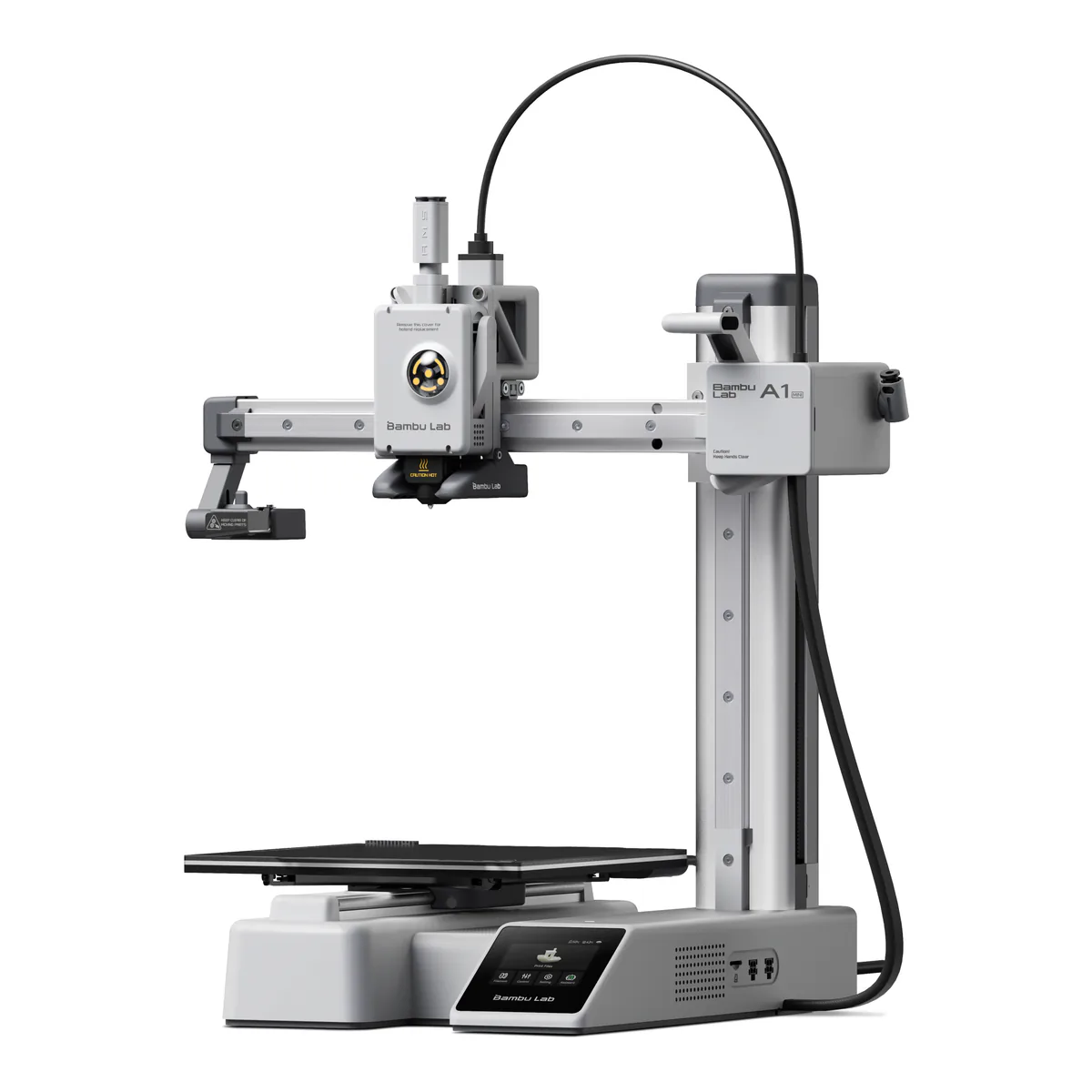
Bambu Lab A1 mini with LED Lamp Kit
Right when every part fits a 180 mm cube, the material is PLA or PETG, and the printer has to share a desk.
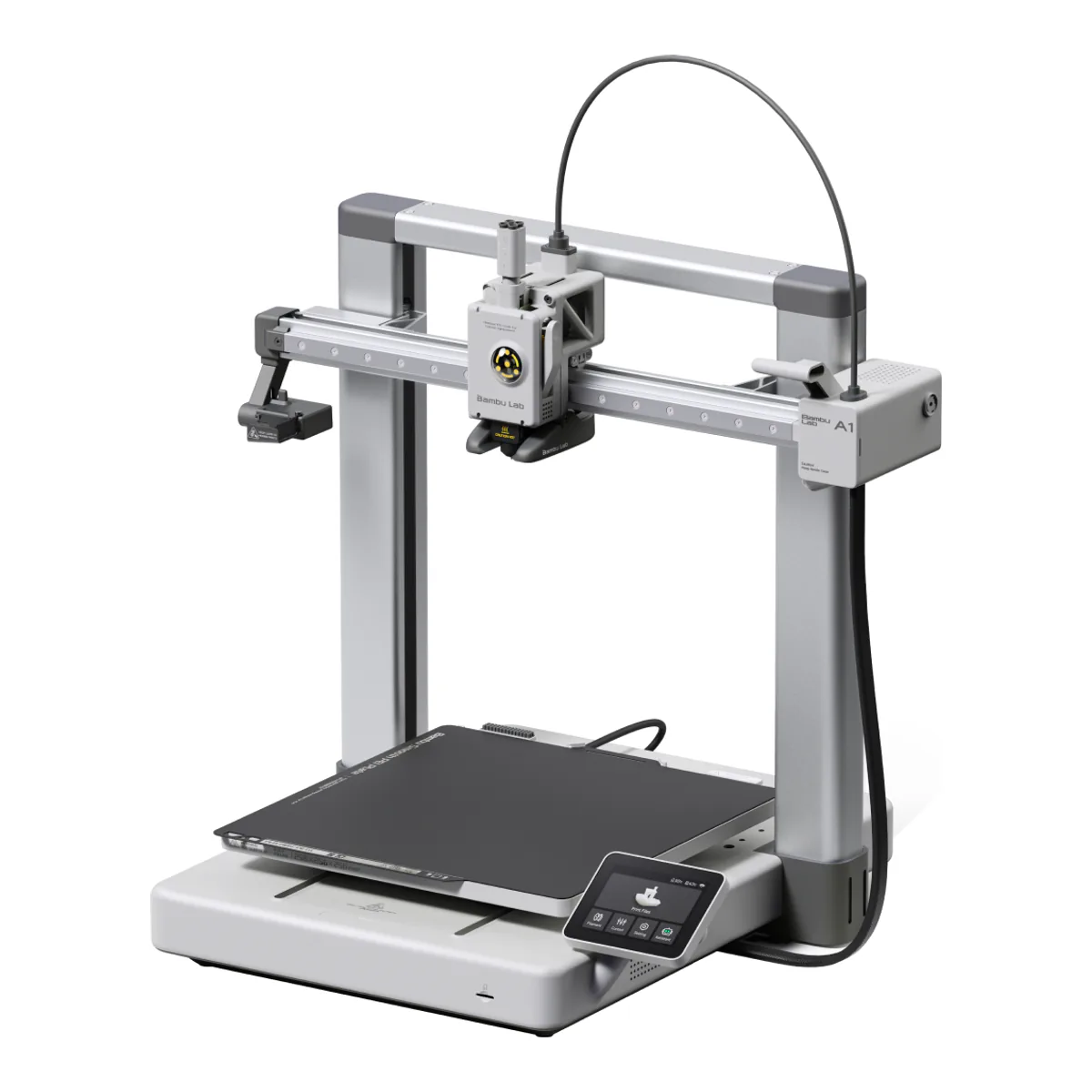
Bambu Lab A1
Right when the largest part is a helmet or a mask in PLA, and the desk takes a 465 mm wide machine with the AMS lite, sold separately, beside it.
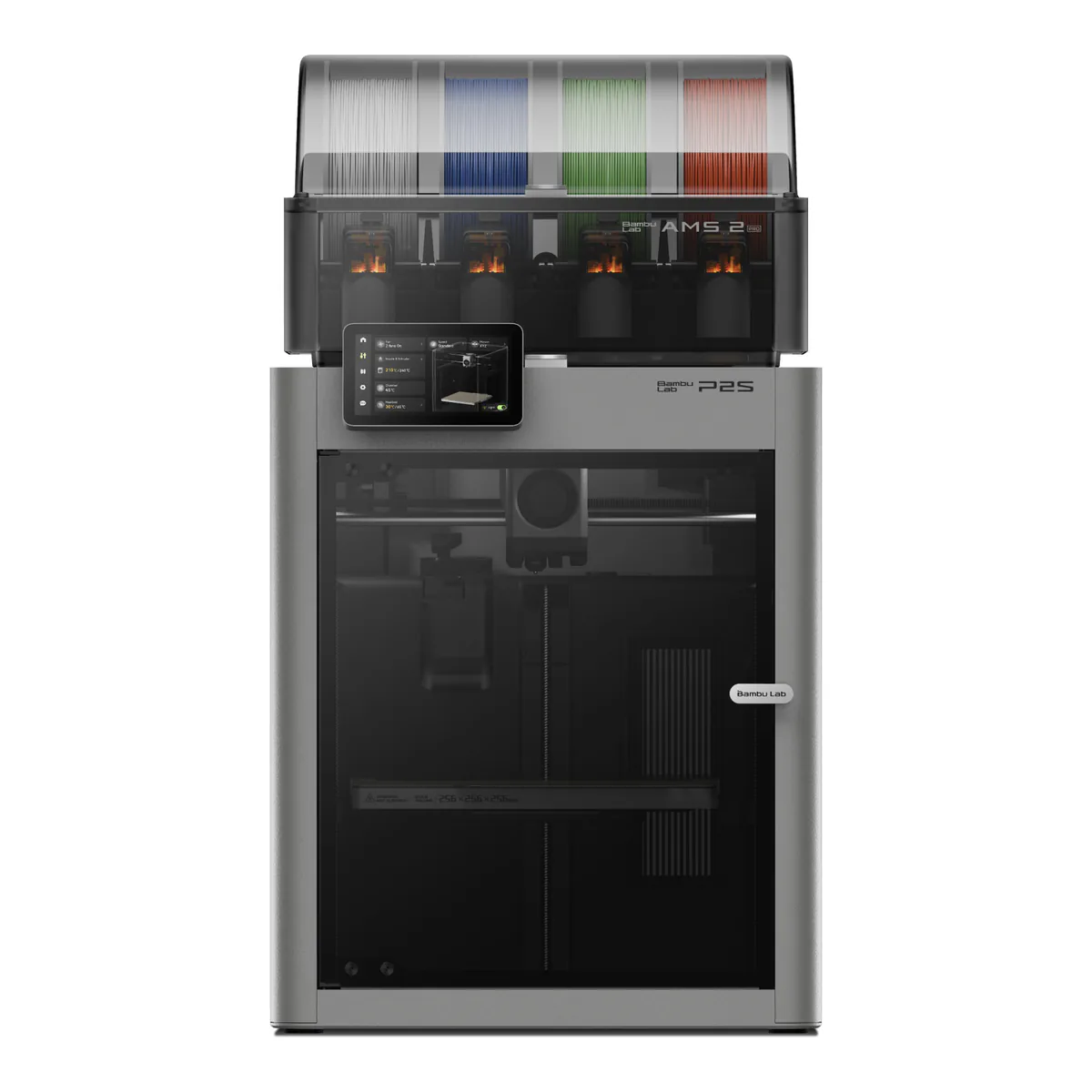
Bambu Lab P2S Combo
Right when the part still fits 256 mm and the enclosure counts for more than extra room. Leave space above it, because the AMS 2 Pro in the box sits on top.
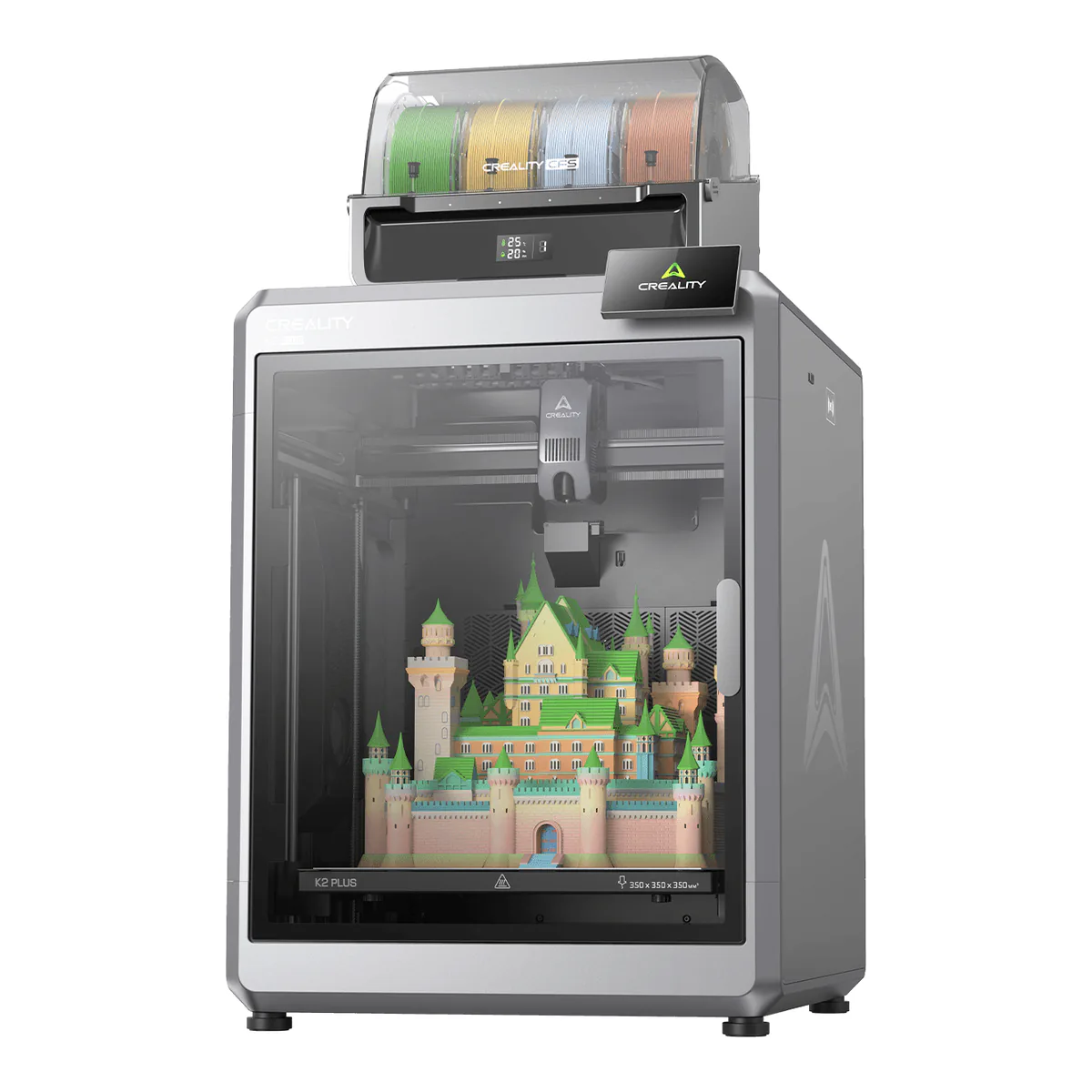
Creality K2 Plus Combo
Right when the part needs 350 mm on every axis, including height, in a material that wants a 60°C chamber, and the bench takes a 35 kg printer with the 4.56 kg CFS on its lid, 916 mm tall together.
QIDI Max4 Combo
Right when the part is wide and up to 340 mm tall, in nylon or PC, and you want the chamber at 65°C. Dry nylon first: the QIDI Box dries at 65°C, and 3D Printed Decor says PA12-CF needs 90°C.
Sovol SV08 Max
Right when the part needs 500 mm across, the printer can stay on one floor for good, and you accept assembly and tuning to get there.